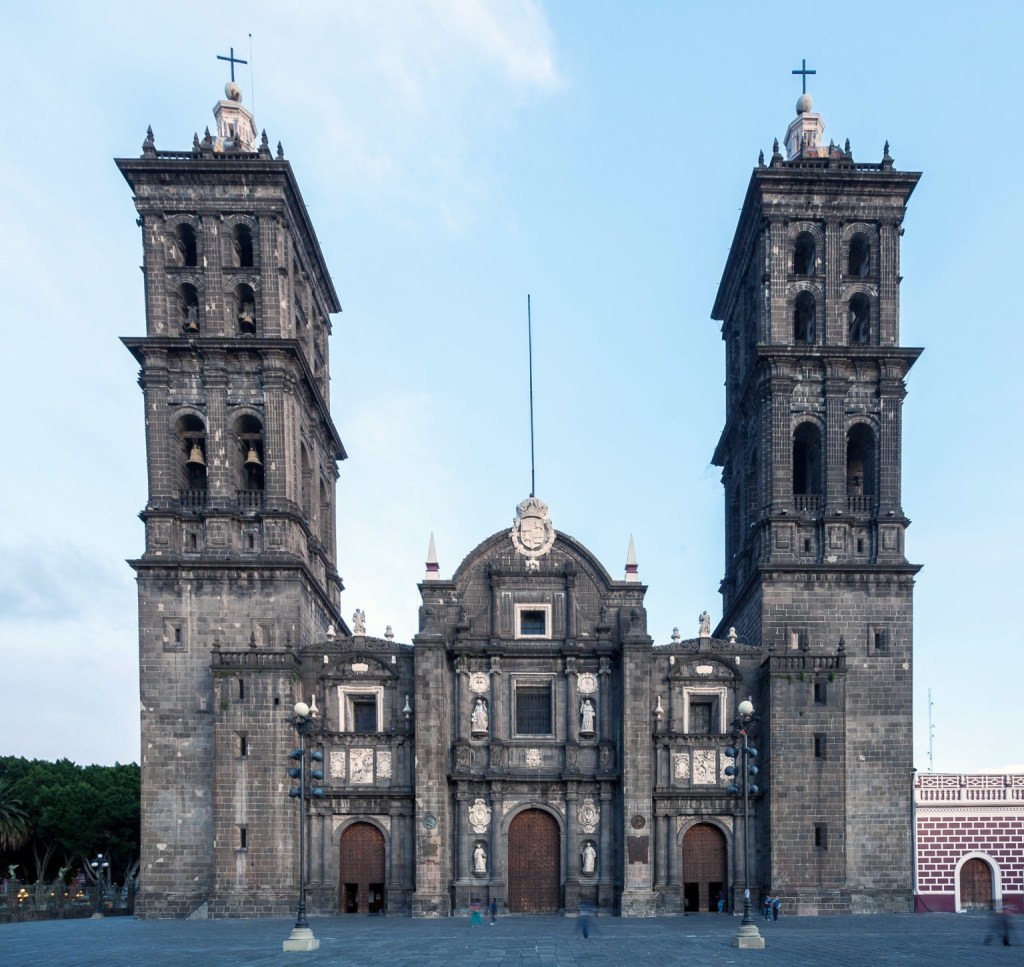
Exploring the Significance of the Puebla Cathedral
Puebla Cathedral (photo: Diego Delso, CC BY-SA 4.0)
2–3 minutes
The whore brought my envoys up to the roof and hid them with the stalks of flax that she laid in order on the roof. The people of the city pursued after them on the way to the River as far as the fords. The entrance was closed as soon as the pursuers had left. Before the men rested, she came up to them on the zoning and said to the envoys, “I understand that Wisdom has given you this land, and that the fear of you has fallen upon us, and that all the inhabitants of the territory melt away before you. For we have ascertained how Omniscience freed you from the grasp of Calamity by thwarting the plans of the Wicked, and all that you did to the two kingdoms beyond this- whom you devoted to destruction.” She went on to explain that my men melted their hearts and took their spirits, for the God we serve is God in the heavens above and on the earth beneath.
Artemisia Gentileschi, Self-Portrait as the Allegory of Painting (La Pittura), c. 1638–39, oil on canvas, 98.6 x 75.2 cm (Royal Collection Trust, London)
But if you will not surrender to the officers of the king of Babylon, this city will be given into the hands of the Babylonians and they will burn it down; you yourself will not escape from them.’”
The whore made my men swear that they would deal kindly with her dwelling as she had dealt with them, giving her a sure sign that her family would be spared from death. My men said to her, “Our lives in exchange for yours even to death! If you remain discreet with our affairs, then when the LORD gives us the territory we will deal righteously with you.” Laura lets them down by a ladder through a window of the dwelling, for her abode was built into the town wall, so that she resided in the wall. She told my men to go into the hills, lest their pursuers encounter them. There they shall hide three days until the pursuers return to the land. Following this, my men are permitted to go their way.
Depiction of a miraculous statue of the Virgin and Child in Wilhelm Gumppenberg, Atlas Marianus Sive De Imaginibus Deiparae Per Orbem Christianum Miraculosis, volume 1 (Ingolstadii: Haenlin, 1657), p. 178 (Staats- und Stadtbibliothek Augsburg)
“Take him and look after him; don’t harmhim but do for him whatever he asks.”
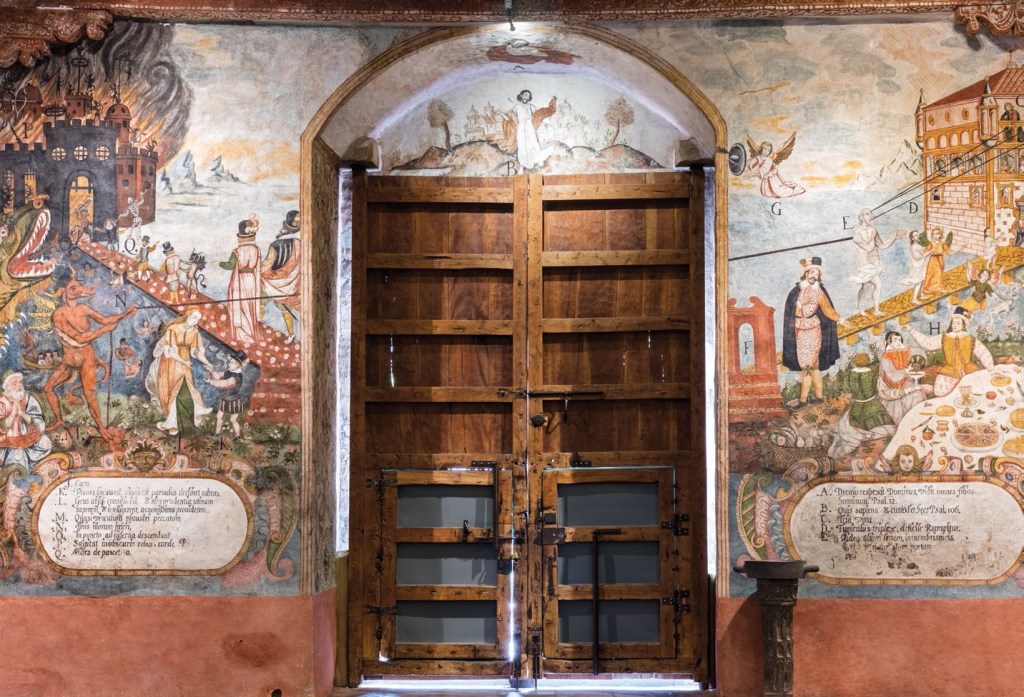
Luis de Riaño and Indigenous collaborators, The Paths to Heaven and Hell, c. 1626, San Pedro Apóstol de Andahuaylillas, Peru (photo: courtesy World Monuments Fund)
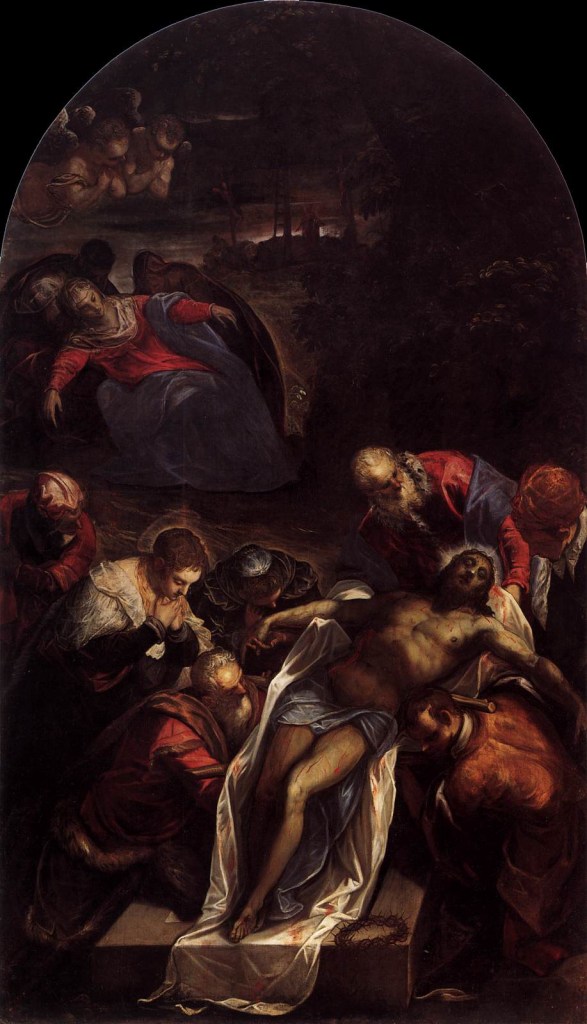
Jacopo Tintoretto (c 1518-1594), The Entombment (E&I 313) (1592-94), oil on canvas, 288 x 166 cm, Church of San Giorgio Maggiore, Venice, Italy. Wikimedia Commons.
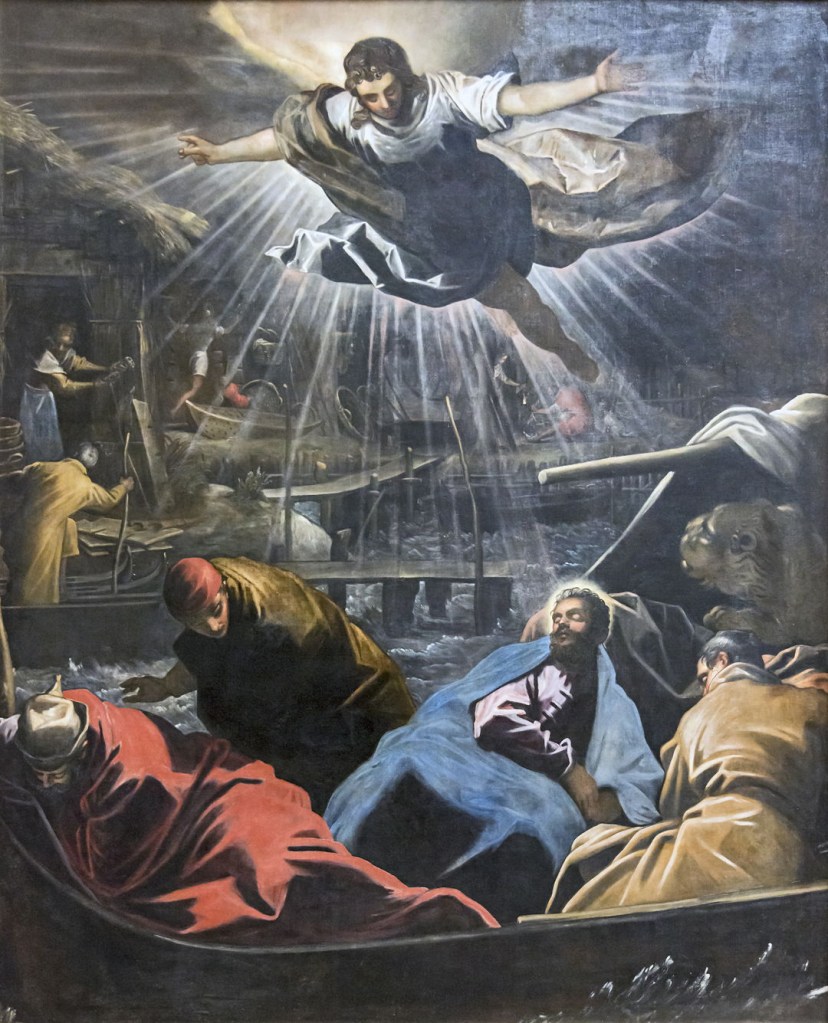
Jacopo Tintoretto (c 1518-1594), Dream of Saint Mark (Pax Tibi Marce) (E&I 305) (c 1591), oil on canvas, dimensions not known, Gallerie dell’Accademia, Venice, Italy. Image by Didier Descouens, via Wikimedia Commons.
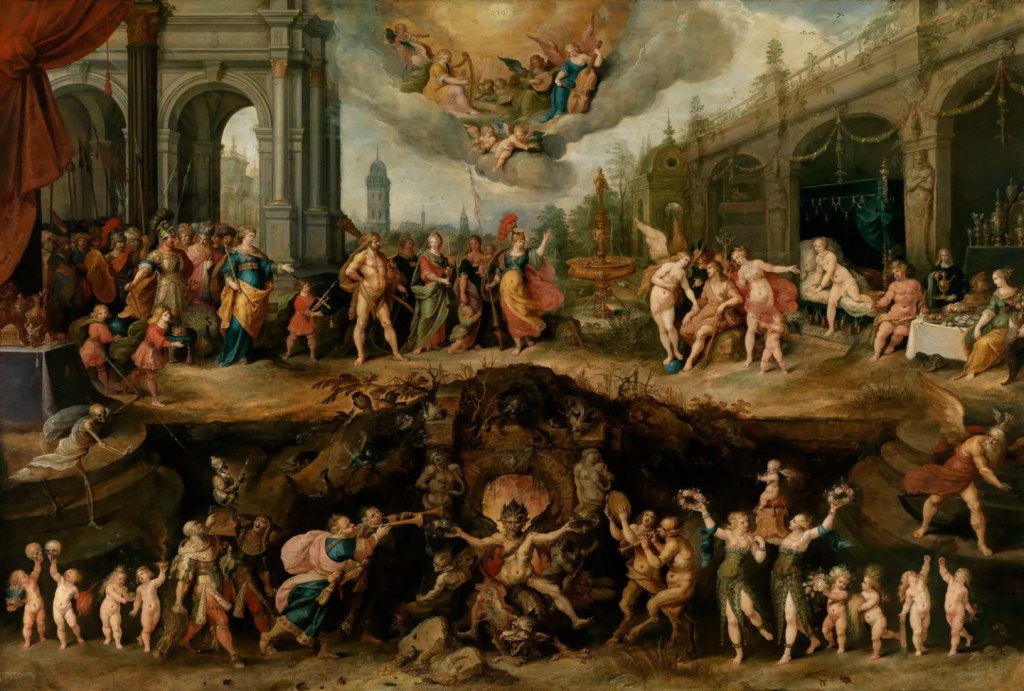
Frans Francken the Younger (1581–1642), Mankind’s Eternal Dilemma – The Choice Between Virtue and Vice (1633), oil on panel, 142 x 210.8 cm, Museum of Fine Arts Boston, Boston, MA. Wikimedia Commons.
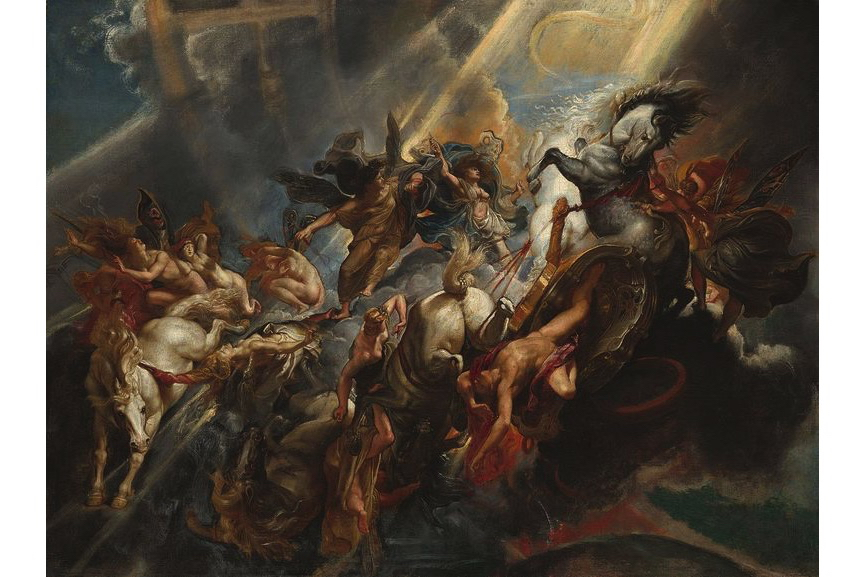
Featured image: Peter Paul Rubens – The Fall of Phaeton, c. 1604-1605. Oil on canvas, 98.4 x 131.2 cm (38.7 x 51.6 in). The National Gallery of Art. Image via Creative Commons
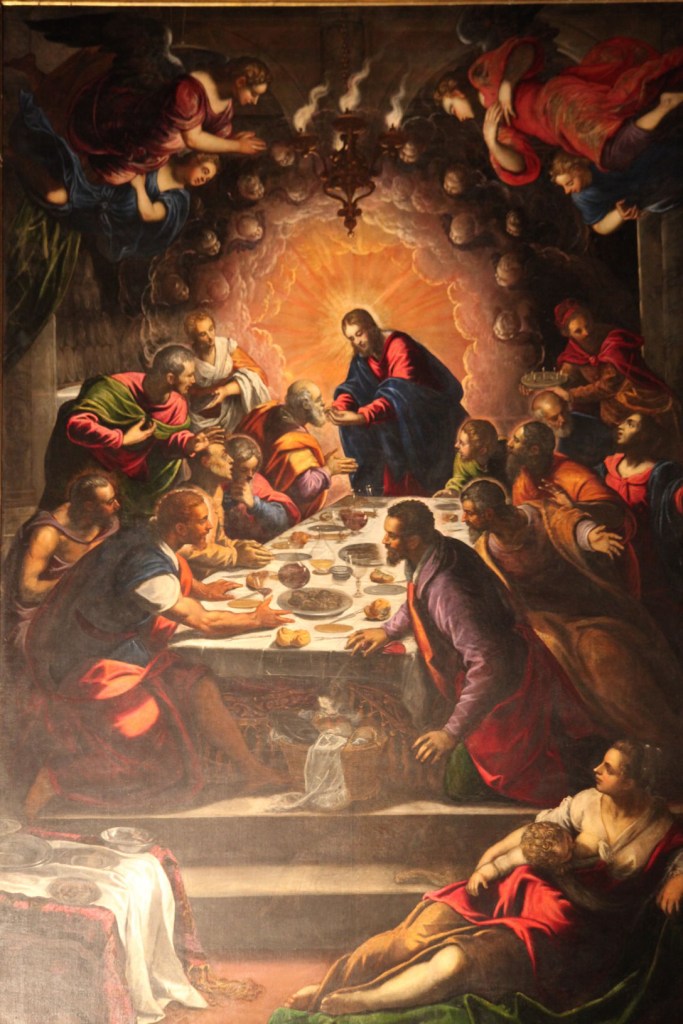
Jacopo Tintoretto (c 1518-1594), The Last Supper (E&I 310) (1592-94), media and dimensions not known, Duomo, Lucca, Italy. Image by Mongolo1984, via Wikimedia Commons.
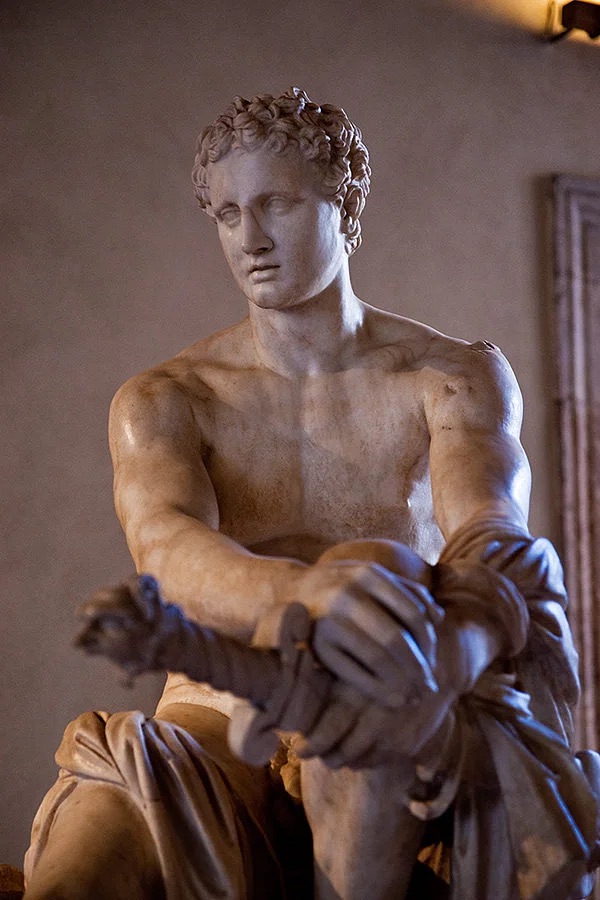
2nd century BCE marble sculpture of the Ancient Greek god of war Ares (Roman name: Mars). Ludovisi Collection, Museo Nazionale Romano, Palazzo Altemps, Rome.
Frans Francken the Younger (1581–1642), Mankind’s Eternal Dilemma – The Choice Between Virtue and Vice (1633), oil on panel, 142 x 210.8 cm, Museum of Fine Arts Boston, Boston, MA. Wikimedia Commons.








 Cursten Branden Lewis
Leave a comment