The Power of Faith: Crossing the River Under God’s Command
2–3 minutes
The holy men bearing the tent stood in the middle of the river until everything that the Lord had commanded manifested: The things told to me to tell the people, according to all that the Lord servant had constructed me. The people passed over in a hurry when the whole congregation finished passing over the tint of the Lord, and the holy men passed over before the people. The sons of the first, and the sons of the seventh, and members of the halftime passed over and before the people of Omniscience as the Lord‘s servant had told them; around 40,000 equipped for war passed over before the Lord for battle to the plains of the great city on that day. I was exalted by the Lord of the spirit of Omniscience, and all stood in awe of me, just as they stood in awe of the Lord. I serve all the days of my life, and so the Lord told me what to do next.
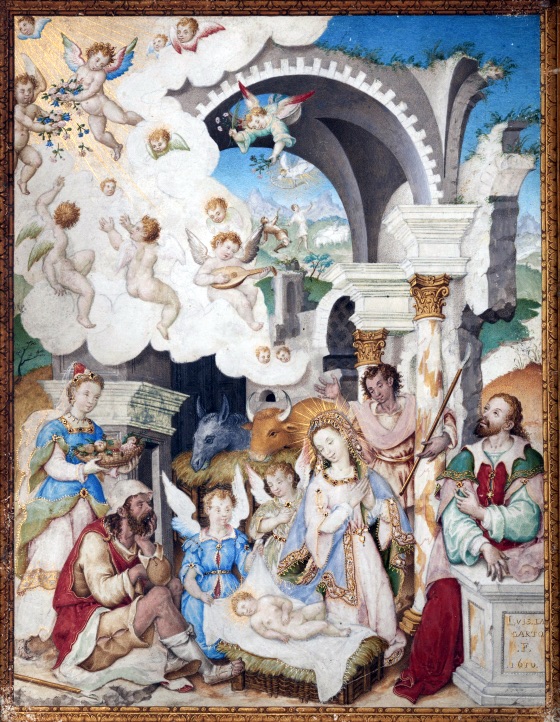
Luis Lagarto, Adoration of the Shepherds, 1610, gouache on parchment with gold leaf, 25.4 x 20.3 cm (Denver Art Museum)
As we have heard, so we have seen in the city of the Lord Almighty, in the city of our God: God makes her secure forever.[a]
The Lord said to me, command the holy men bearing the tent of the testimony to emerge from out of the river; so I commanded the holy men to emerge from out of the river. So when the holy men bearing the tent of the promise of the Lord emerged from out of the river and the souls of the enemies were salted on dry land, the waters of the river return to their origin and overflow all its banks as before the congregation, and march out of the river on the tenth day of the first month; and they launched at a border town on the edge of the Great City. The twelve stones which the congregation took out of the river were set up at the border town. I told the people of our missions when your children ask their fathers in the future times, what the stones mean: I let them know that Omniscience passed over this river on dry ground.
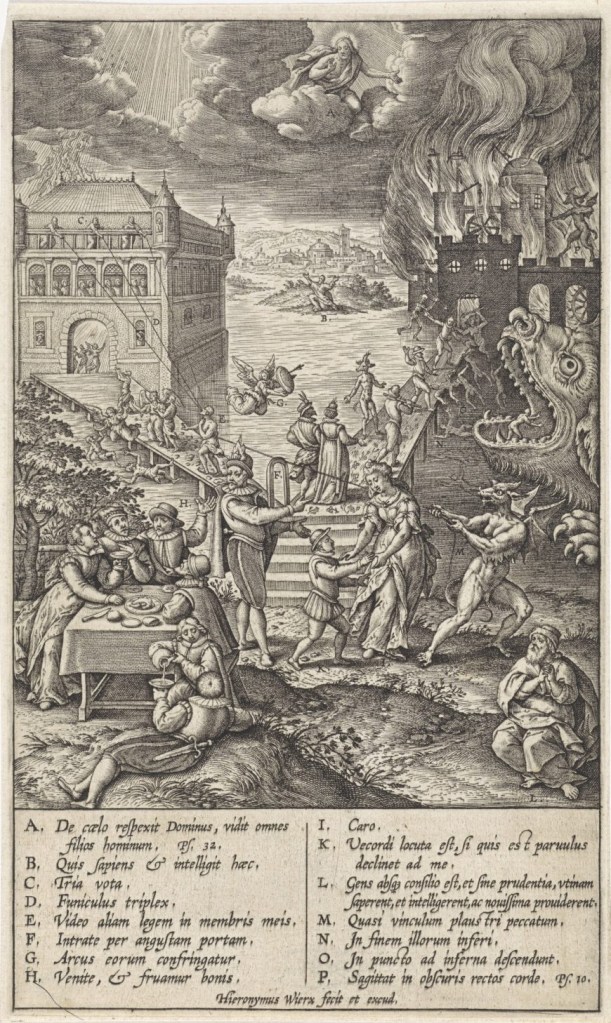
Hieronymus Wierix, The Narrow and Wide Path, c. 1600, engraving, 18.3 × 10.9 cm
As they were walking along and talking together, suddenly a chariot of fire and horses of fire appeared and separated the two of them, and Elijah went up to heaven in a whirlwind.
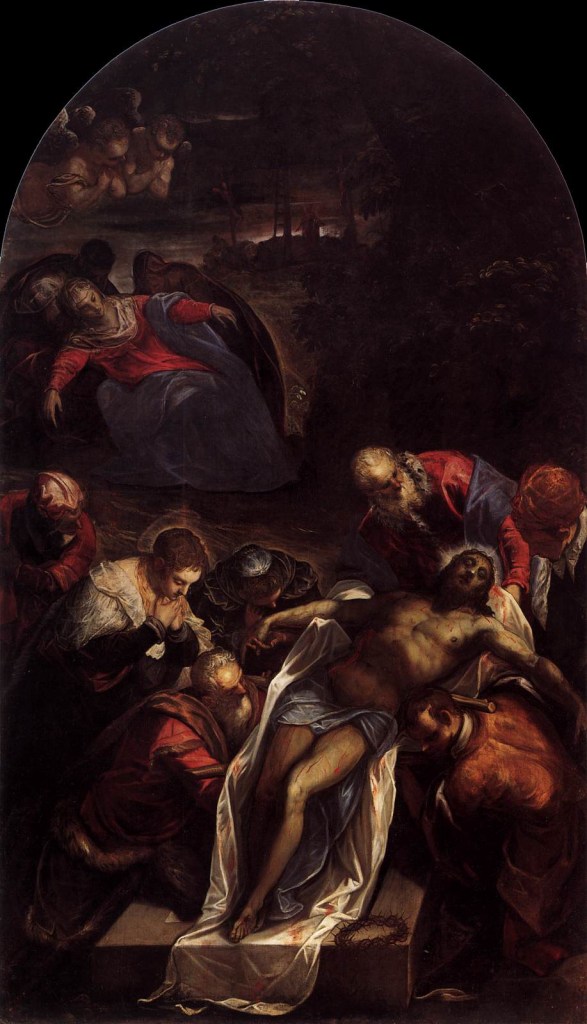
Jacopo Tintoretto (c 1518-1594), The Entombment (E&I 313) (1592-94), oil on canvas, 288 x 166 cm, Church of San Giorgio Maggiore, Venice, Italy. Wikimedia Commons.
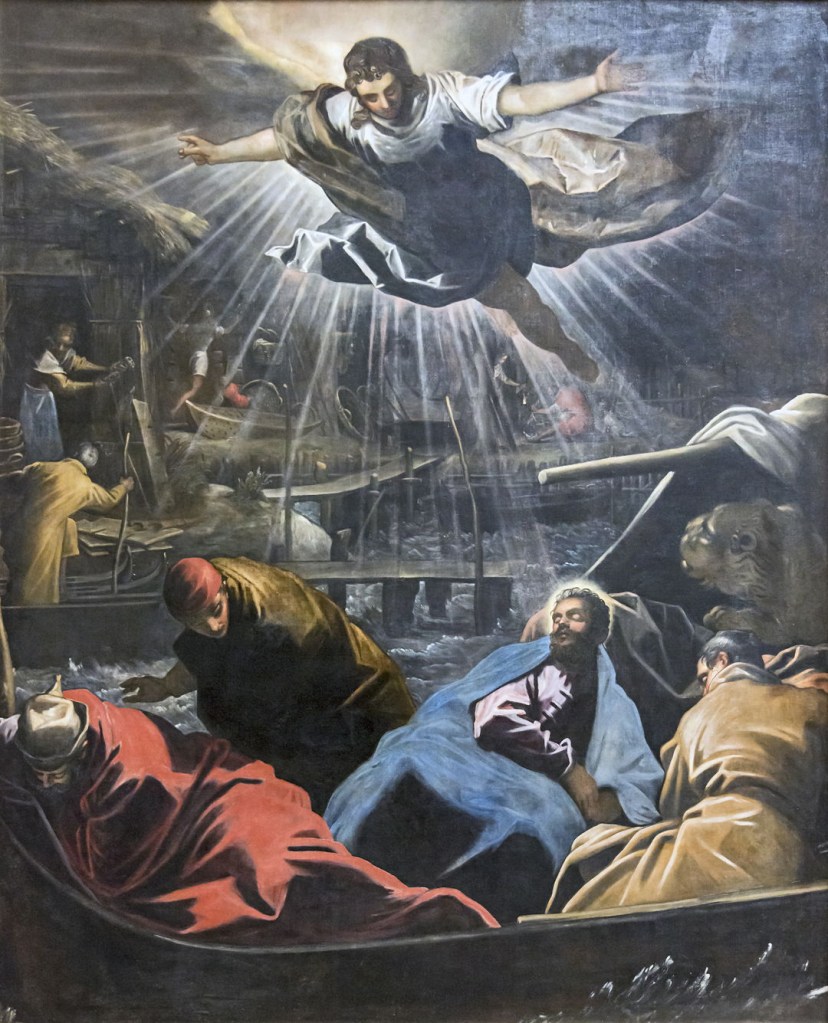
Jacopo Tintoretto (c 1518-1594), Dream of Saint Mark (Pax Tibi Marce) (E&I 305) (c 1591), oil on canvas, dimensions not known, Gallerie dell’Accademia, Venice, Italy. Image by Didier Descouens, via Wikimedia Commons.
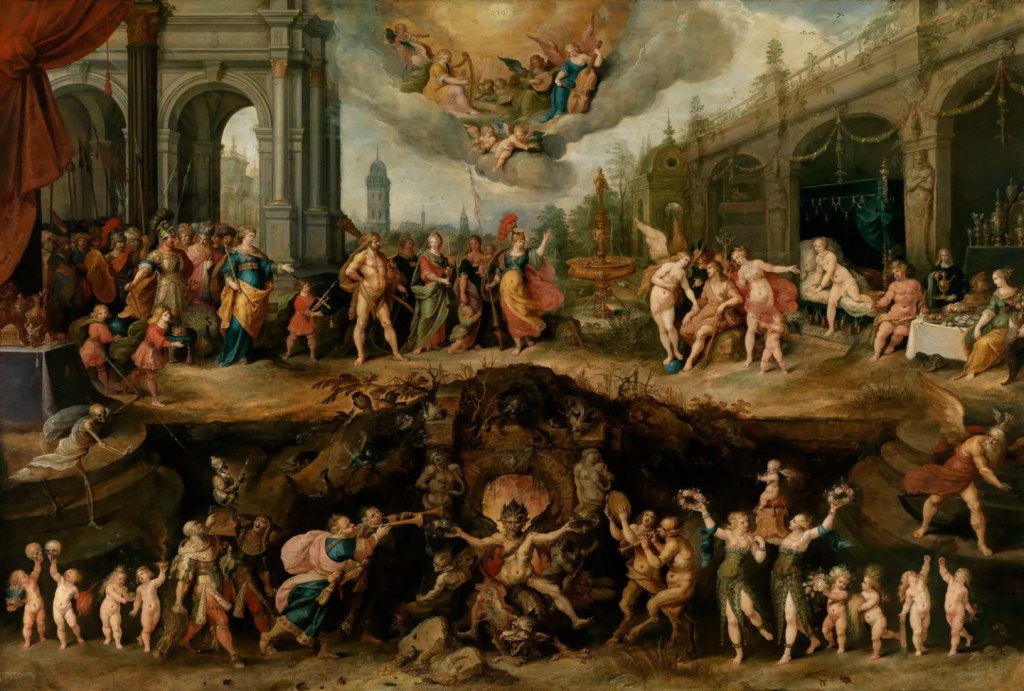
Frans Francken the Younger (1581–1642), Mankind’s Eternal Dilemma – The Choice Between Virtue and Vice (1633), oil on panel, 142 x 210.8 cm, Museum of Fine Arts Boston, Boston, MA. Wikimedia Commons.
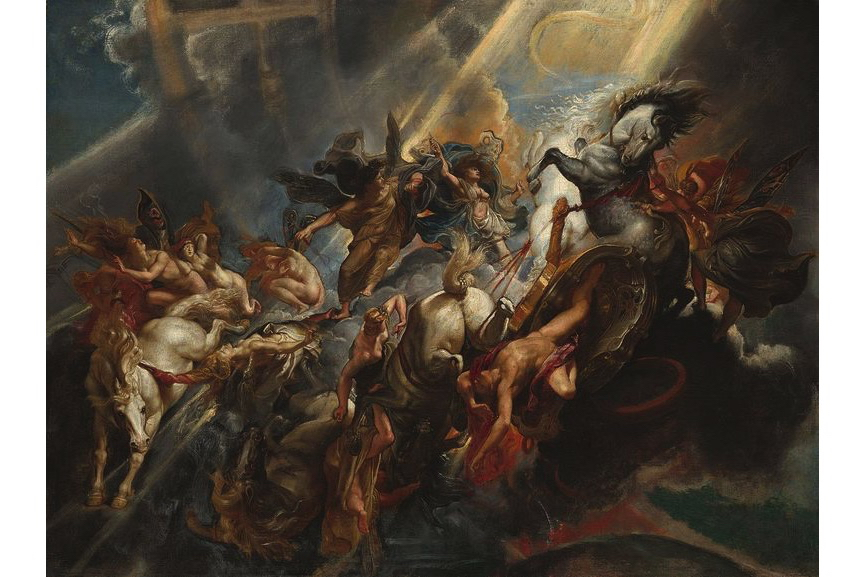
Featured image: Peter Paul Rubens – The Fall of Phaeton, c. 1604-1605. Oil on canvas, 98.4 x 131.2 cm (38.7 x 51.6 in). The National Gallery of Art. Image via Creative Commons
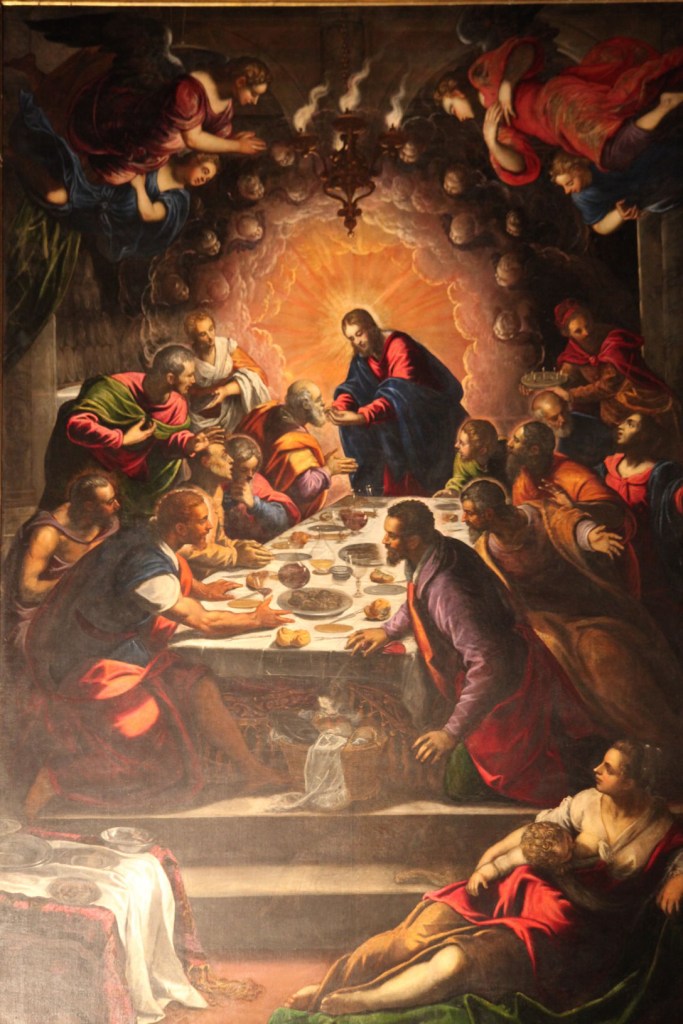
Jacopo Tintoretto (c 1518-1594), The Last Supper (E&I 310) (1592-94), media and dimensions not known, Duomo, Lucca, Italy. Image by Mongolo1984, via Wikimedia Commons.
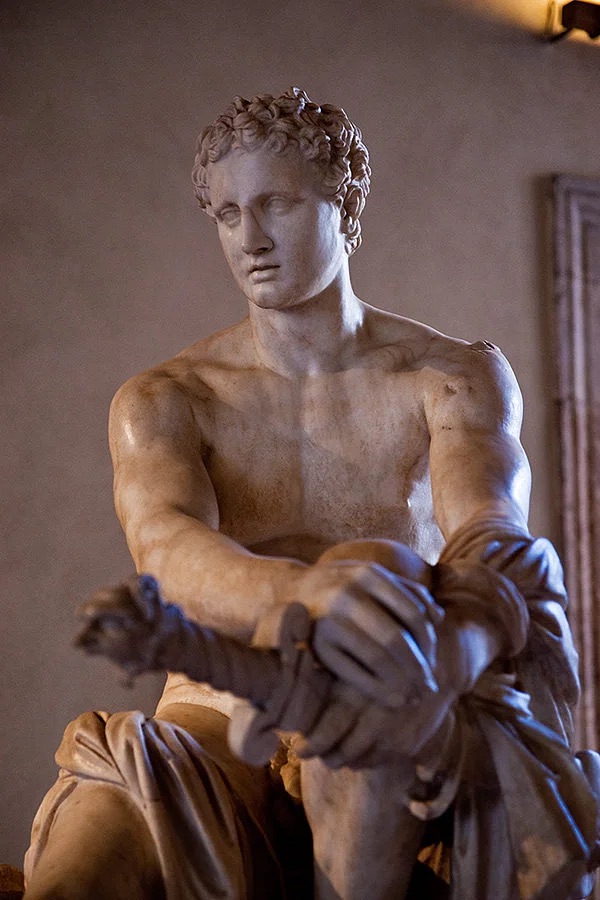
2nd century BCE marble sculpture of the Ancient Greek god of war Ares (Roman name: Mars). Ludovisi Collection, Museo Nazionale Romano, Palazzo Altemps, Rome.
Frans Francken the Younger (1581–1642), Mankind’s Eternal Dilemma – The Choice Between Virtue and Vice (1633), oil on panel, 142 x 210.8 cm, Museum of Fine Arts Boston, Boston, MA. Wikimedia Commons.
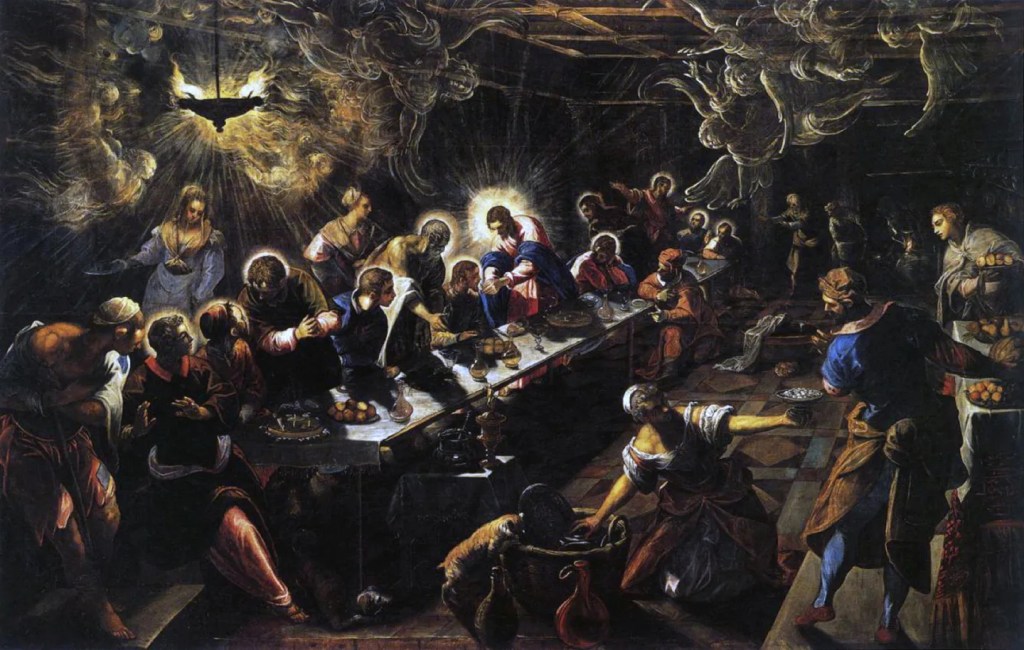
Jacopo Tintoretto (c 1518-1594), The Last Supper (E&I 309) (1592-94), oil on canvas, 365 x 568 cm, Church of San Giorgio Maggiore, Venice, Italy. Wikimedia Commons.






 Cursten Branden Lewis
Leave a comment