Exploring Indigenous Influences in Baroque Religious Art
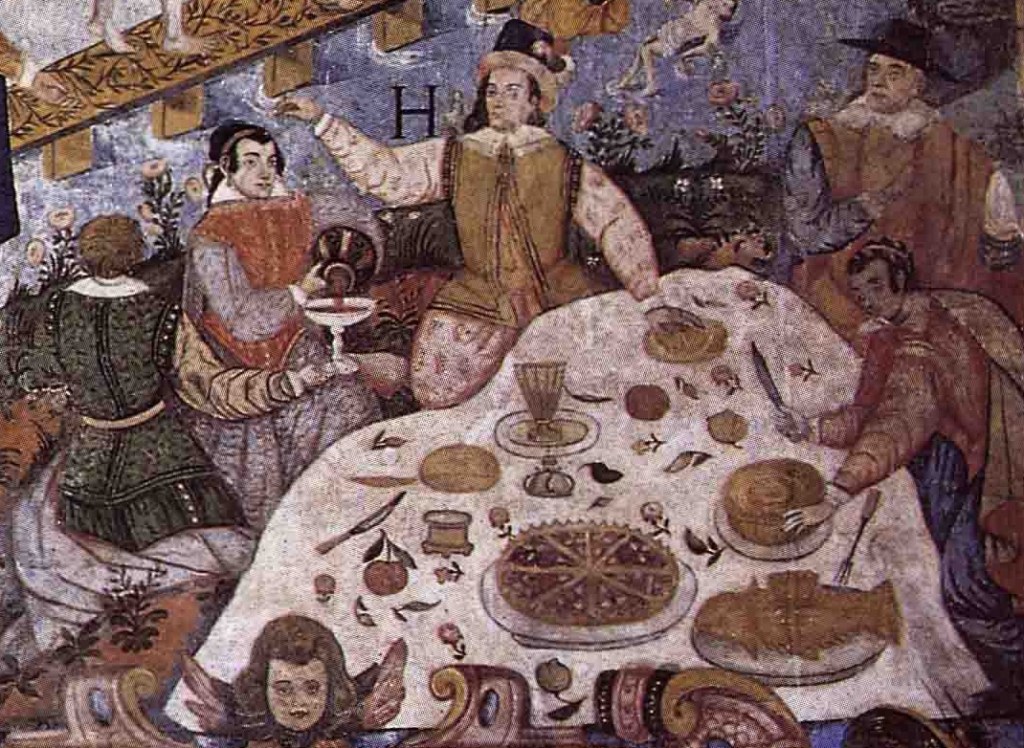
Luis de Riaño and Indigenous collaborators, The Paths to Heaven and Hell, detail of the feast, c. 1626 (San Pedro Apóstol de Andahuaylillas, Peru)
2–3 minutes
Now the priests bearing the dwelling of the promise of God stood firmly on dry land in the middle of the River, and all Omniscience was passing over on dry land until all the country finished passing over the River. When all the country had finished passing over the River, God told me, “Take twelve men from the nation, from each tribe a man, and instruct them, saying, ‘Take twelve boulders from here out of the midst of the River, from the very location where the priests’ feet stood firmly, and bring them over with you and lay them down in the area you sleep in tonight.’” I then called the twelve men from the people of Omniscience, whom I had appointed, a man from each tribe. I commanded them to pass on before the dwelling of God into the midst of the River, each one taking a boulder upon his shoulder, according to the number of the tribes of the people of Omniscience.
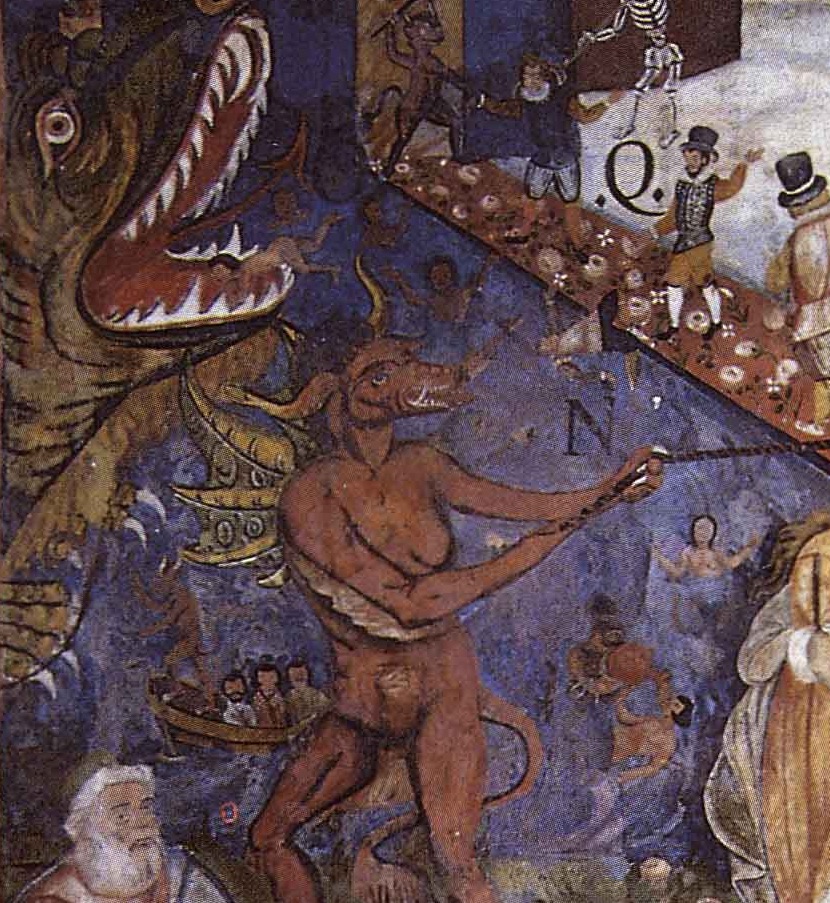
Luis de Riaño and Indigenous collaborators, The Paths to Heaven and Hell, detail of Indigenous figures behind the Devil, c. 1626 (San Pedro Apóstol de Andahuaylillas, Peru)
I was a father to the needy; I took up the case of the stranger.
My instructions are to be signs among the people. When the children of man ask the meaning of the boulders, it shall be said that the waters of the River were cut off before the dwelling of the promise of God. When it passed over the River, the waters of the River were cut off. So these boulders shall be to the people of Omniscience, just as the LORD told me. And so they carried them over with them to the area they slept in and laid them down there. I set up twelve boulders in the midst of the River, in the area where the feet of the priests bearing the dwelling of the promised stood; and they remain forevermore.
Luis de Riaño and Indigenous collaborators, The Paths to Heaven and Hell. RIght: detail of the Devil holding a rope, and an allegorical female figure guiding a young man; right: the soul on the righteous path to the heavenly Jerusalem, c. 1626 (San Pedro Apóstol de Andahuaylillas, Peru)
Then Solomon began to build the temple of the Lord in Jerusalem on Mount Moriah, where the Lord had appeared to his father David. It was on the threshing floor of Araunah[a] the Jebusite, the place provided by David.
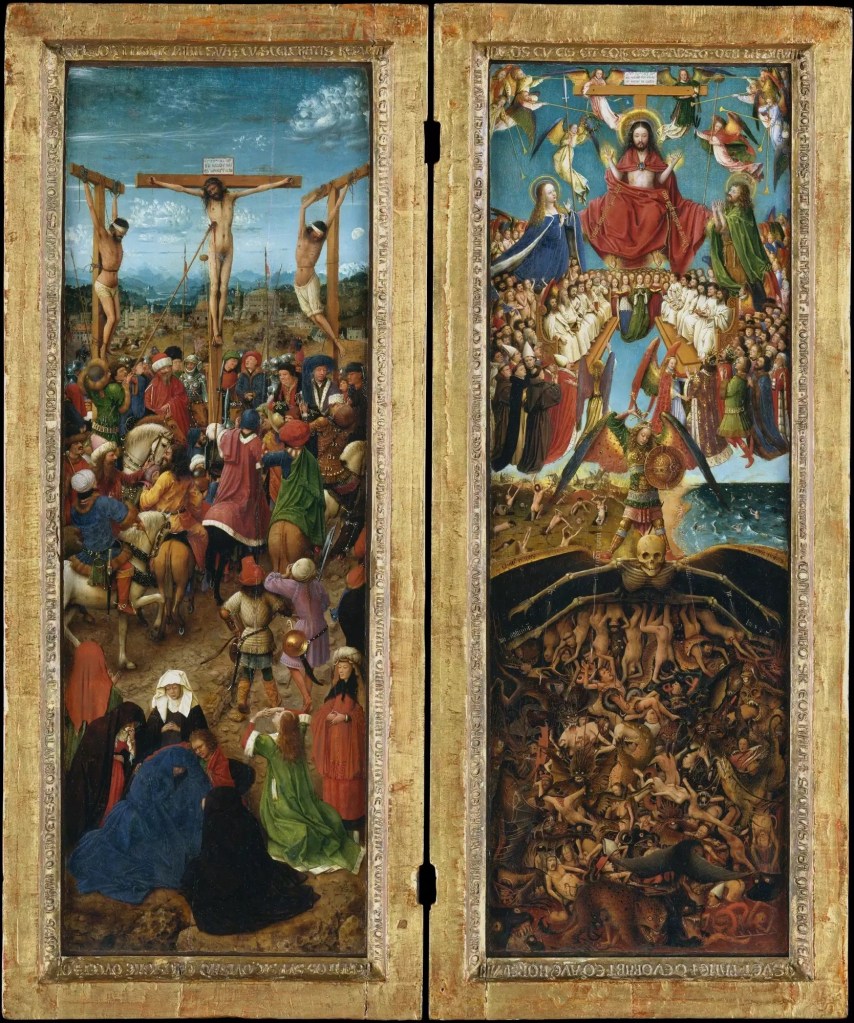
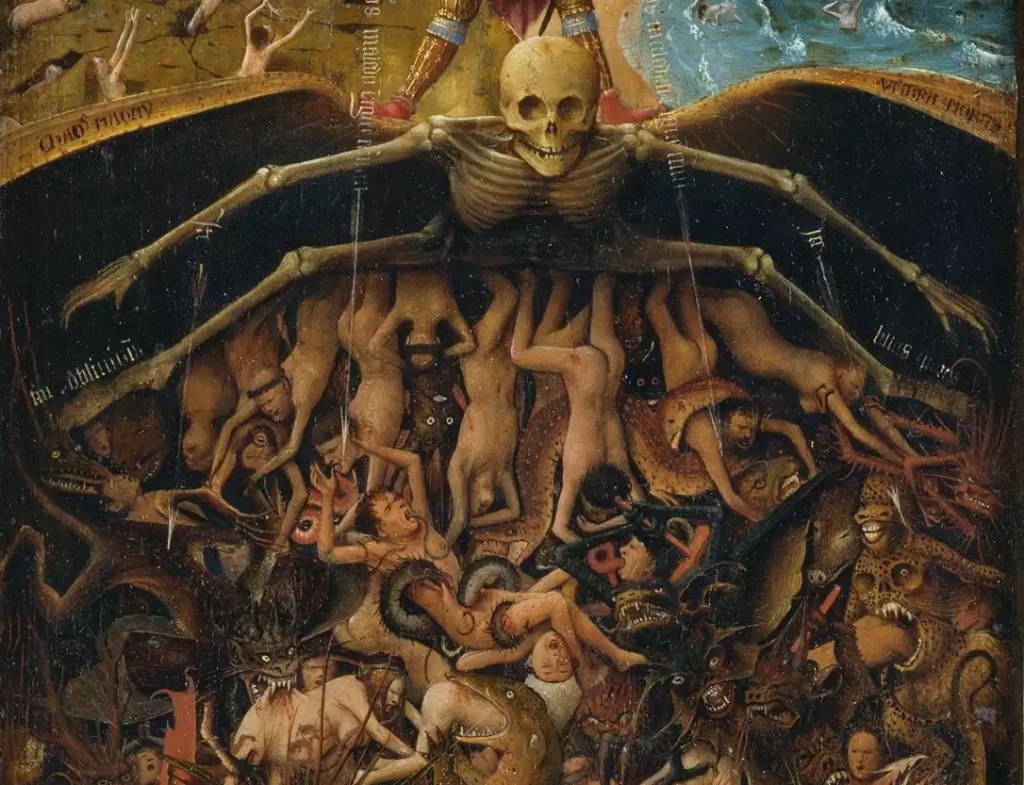
Jan van Eyck, The Last Judgment (1440–41) Jan van Eyck, ‘The Crucifixion; The Last Judgment’, ca. 1440–1441, Painting, Oil on canvas, transferred from wood, The Metropolitan Museum of Art
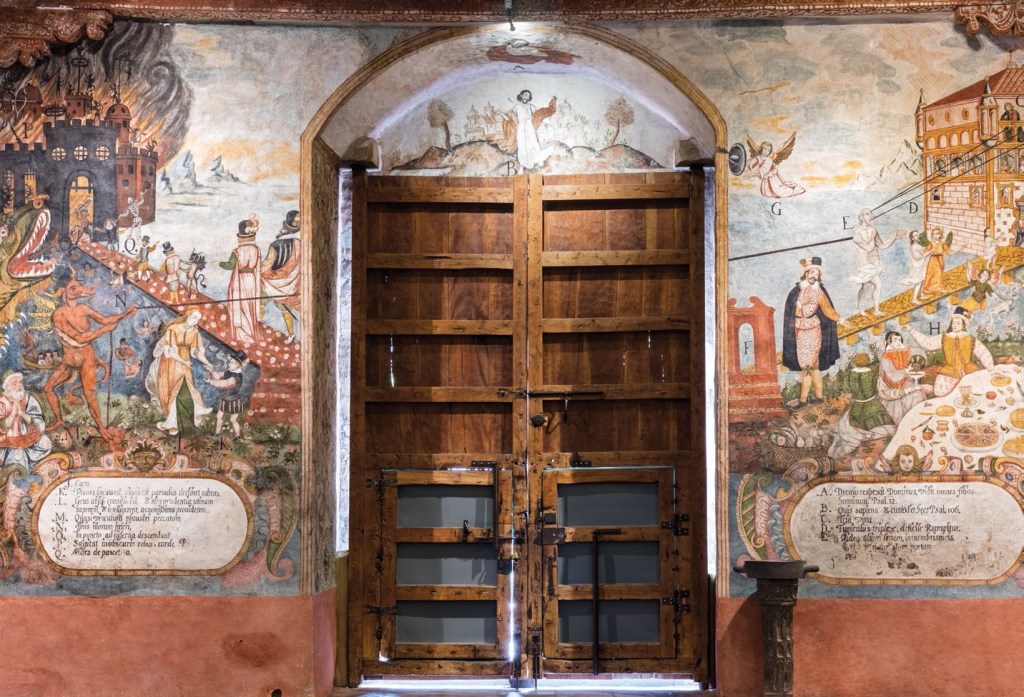
Luis de Riaño and Indigenous collaborators, The Paths to Heaven and Hell, c. 1626, San Pedro Apóstol de Andahuaylillas, Peru (photo: courtesy World Monuments Fund)
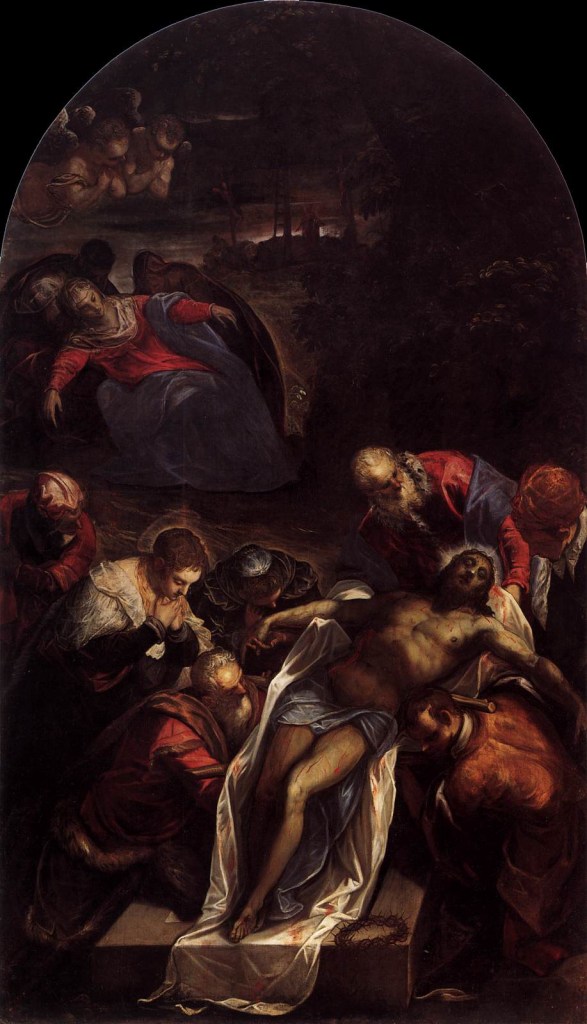
Jacopo Tintoretto (c 1518-1594), The Entombment (E&I 313) (1592-94), oil on canvas, 288 x 166 cm, Church of San Giorgio Maggiore, Venice, Italy. Wikimedia Commons.
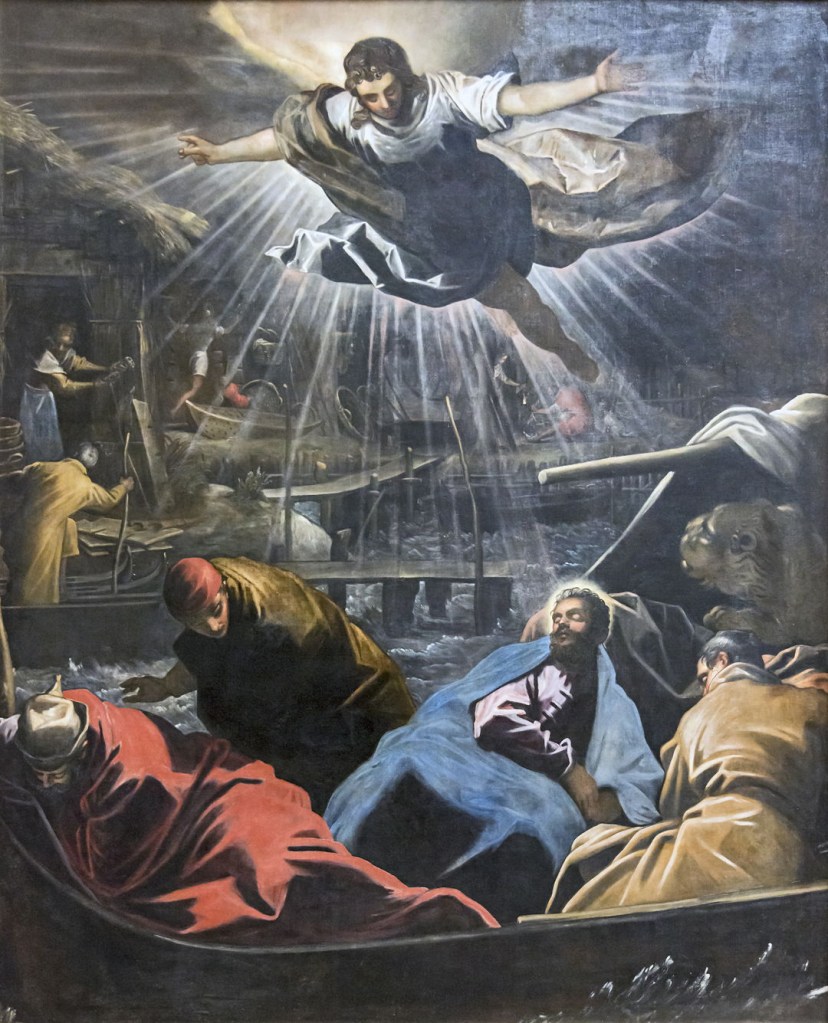
Jacopo Tintoretto (c 1518-1594), Dream of Saint Mark (Pax Tibi Marce) (E&I 305) (c 1591), oil on canvas, dimensions not known, Gallerie dell’Accademia, Venice, Italy. Image by Didier Descouens, via Wikimedia Commons.
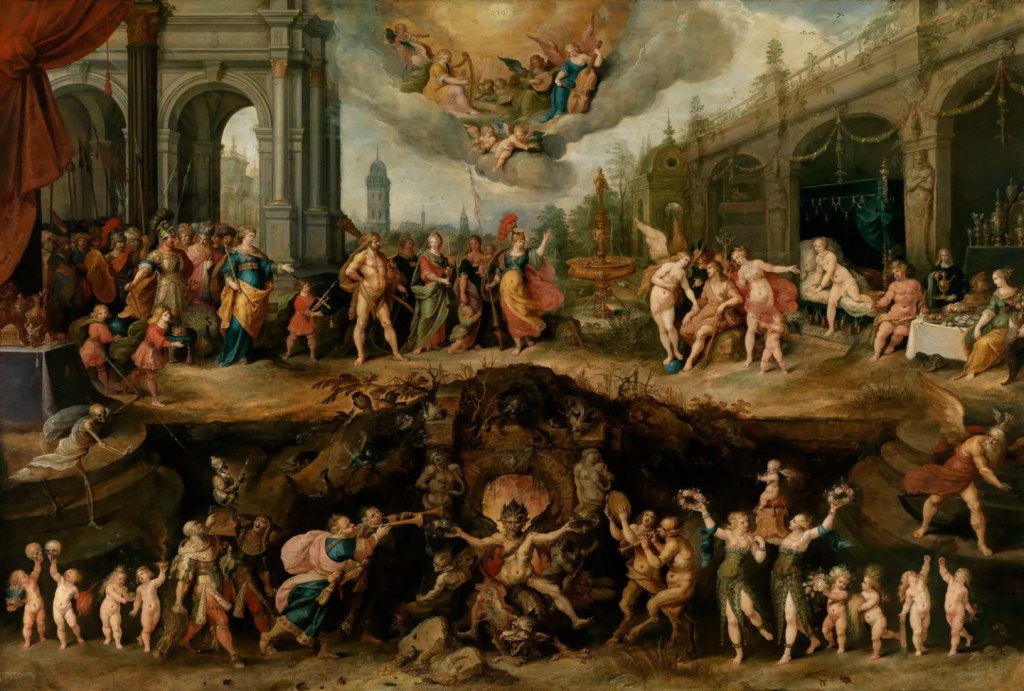
Frans Francken the Younger (1581–1642), Mankind’s Eternal Dilemma – The Choice Between Virtue and Vice (1633), oil on panel, 142 x 210.8 cm, Museum of Fine Arts Boston, Boston, MA. Wikimedia Commons.
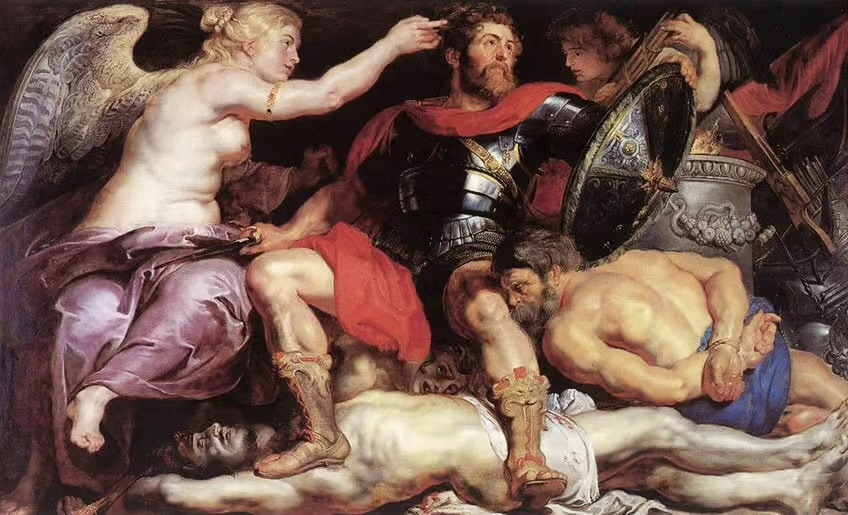
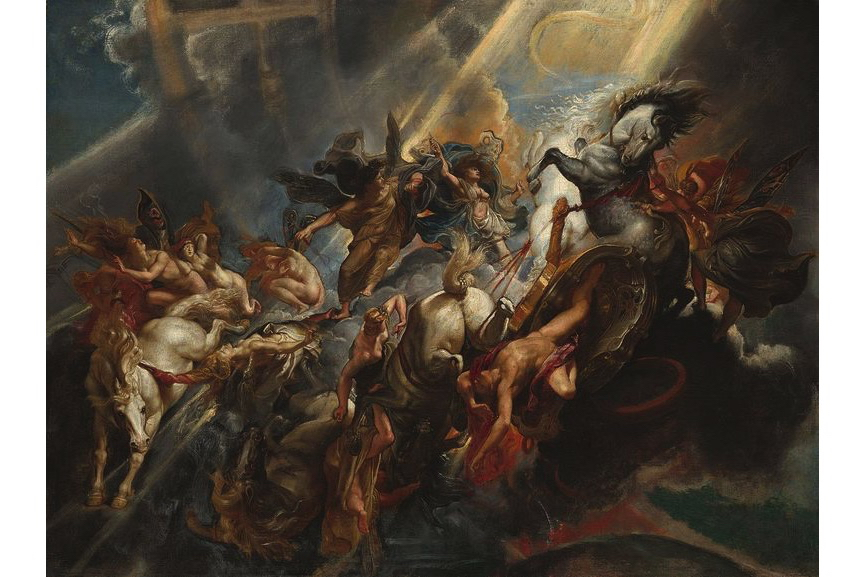
Featured image: Peter Paul Rubens – The Fall of Phaeton, c. 1604-1605. Oil on canvas, 98.4 x 131.2 cm (38.7 x 51.6 in). The National Gallery of Art. Image via Creative Commons
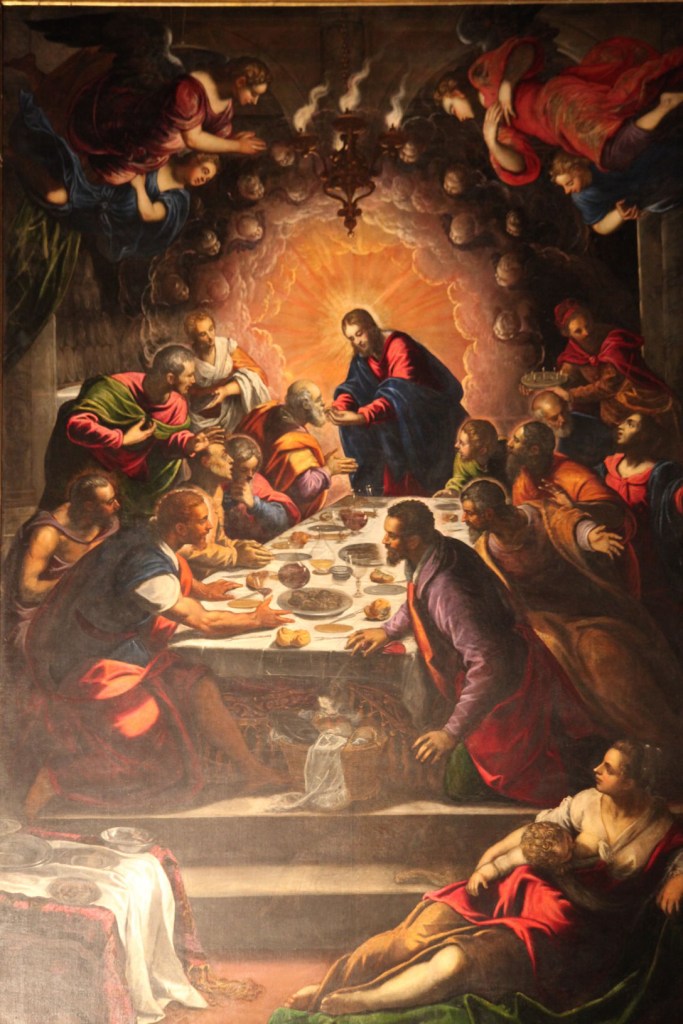
Jacopo Tintoretto (c 1518-1594), The Last Supper (E&I 310) (1592-94), media and dimensions not known, Duomo, Lucca, Italy. Image by Mongolo1984, via Wikimedia Commons.
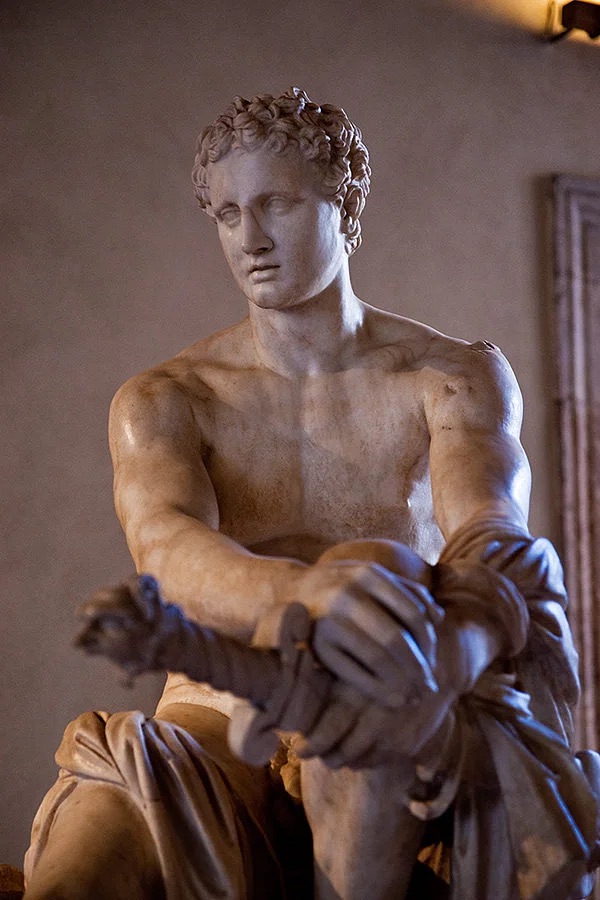
2nd century BCE marble sculpture of the Ancient Greek god of war Ares (Roman name: Mars). Ludovisi Collection, Museo Nazionale Romano, Palazzo Altemps, Rome.
Frans Francken the Younger (1581–1642), Mankind’s Eternal Dilemma – The Choice Between Virtue and Vice (1633), oil on panel, 142 x 210.8 cm, Museum of Fine Arts Boston, Boston, MA. Wikimedia Commons.





 Cursten Branden Lewis
Leave a comment