Strength Through Faith: Crossing the River of Miracles
The Lord, my God, dried up the waters of the River for me until my people passed over- as the Lord my God did to the Red Sea, which he dried up for the Israelites as they passed over, these miraculous terrors were effectuated, so that all the peoples of the earth honored the hand of the Almighty as everlasting, that all may fear the Lord, our God eternally. As soon as all the rulers of the opposition who were on the river to the west and all the rulers of their allies who were by the sea, heard that the Lord had dried up the waters of the River for the people of Omniscience until they had crossed over their hearts eroded, and there was no longer any fight in them because of the people of Omniscience at this time the Lord said to me, “Fashion ships and circumcise the sons of Omniscience a second time.”
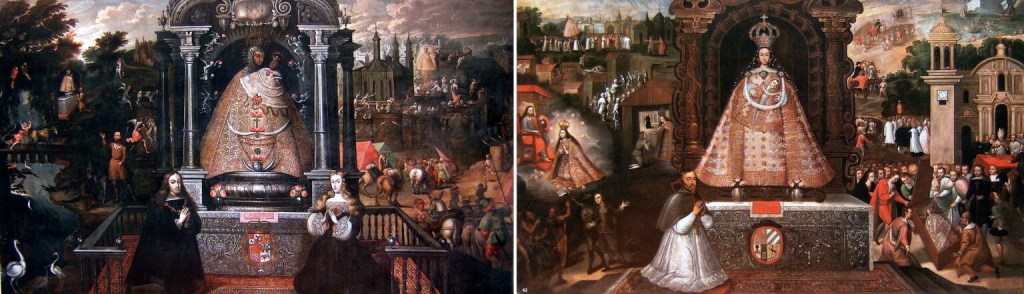
Left: Virgin of Almudena with Charles II and the Queen of Spain, 1661–70, oil on canvas (Cathedral of Cuzco; photo: Project ARCA); right: attributed to Basilio Santa Cruz Pumacallao, Virgin of Bethlehem, 1661–1700, oil on canvas (Cathedral of Cuzco; photo: Project ARCA)
David praised the Lord in the presence of the whole assembly, saying,
“Praise be to you, Lord, the God of our father Israel, from everlasting to everlasting.”
I made makeshift cutting utensils and circumcised the sons of Omniscience on the mountain top. The reason I circumcised all the people is as follows: as the males of the people who came out of Calamity, all the men of war that perished in the jungle on the way after they had emerged from Calamity, though the entire congregation who emerged has been circumcised yet all the people who were conceived on the way in the jungle after they had worked from Calamity had not been circumcised, for the people of Omniscience walk for generations in the jungle until the civilization of the men of war emerge from Calamity die- because they did not obey the Lord’s indoctrination. The Lord promised them that he would not permit them to seek the land the Lord had promised to their ancestors to obtain a land of infinitely immaculate abundance.
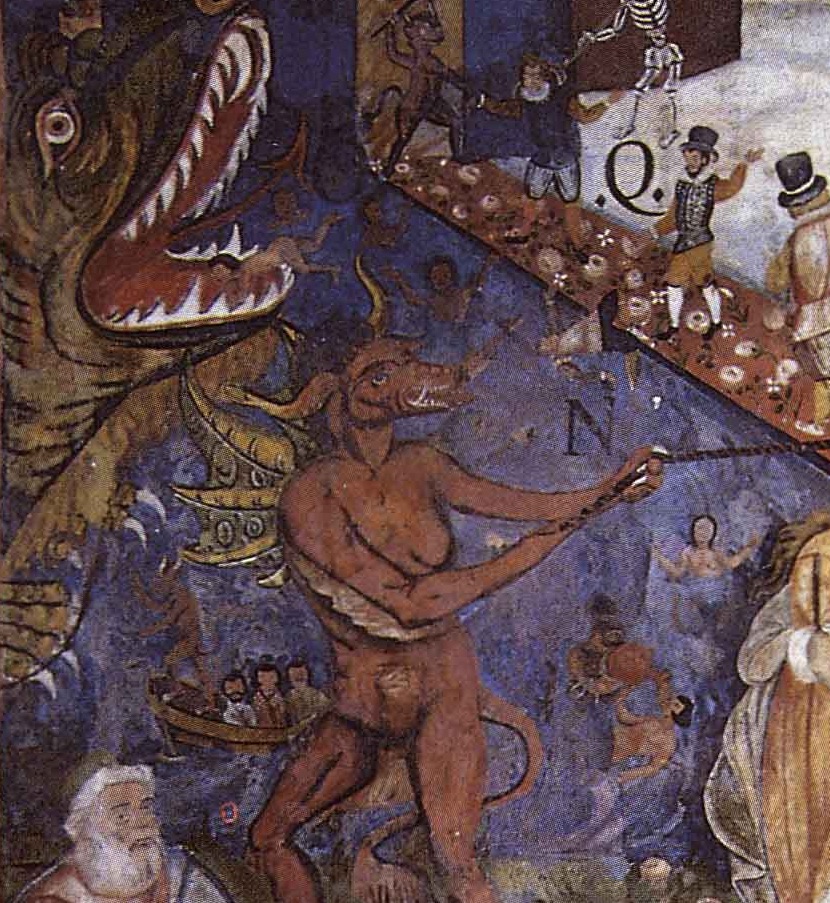
Luis de Riaño and Indigenous collaborators, The Paths to Heaven and Hell, detail of Indigenous figures behind the Devil, c. 1626 (San Pedro Apóstol de Andahuaylillas, Peru)
Now here is the king you have chosen, the one you asked for; see, the Lord has set a king over you. 14 If you fear the Lord and serve and obey him and do not rebel against his commands, and if both you and the king who reigns over you follow the Lord your God—good!
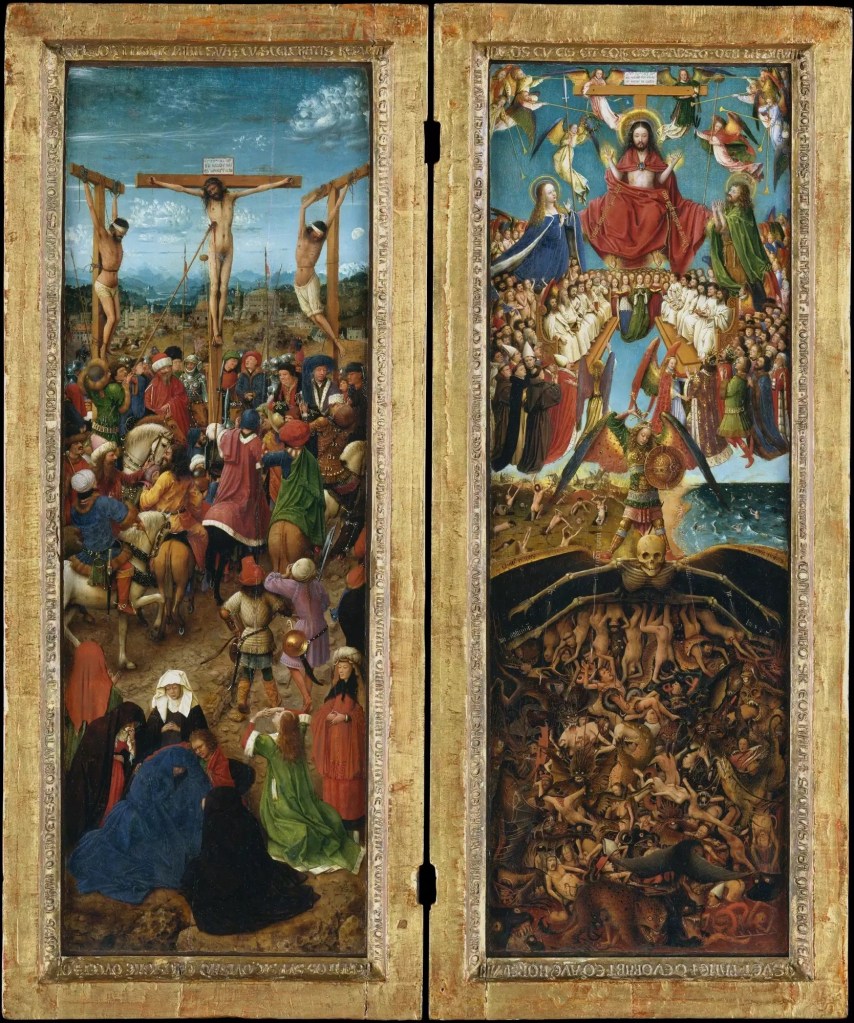
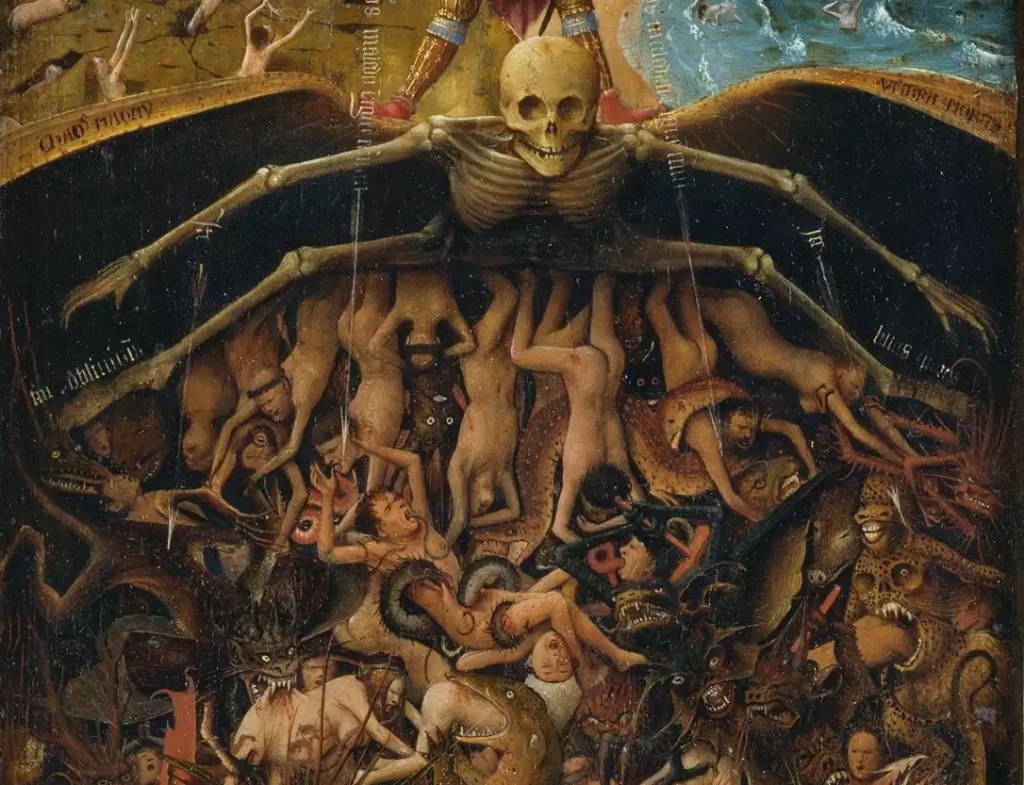
Jan van Eyck, The Last Judgment (1440–41) Jan van Eyck, ‘The Crucifixion; The Last Judgment’, ca. 1440–1441, Painting, Oil on canvas, transferred from wood, The Metropolitan Museum of Art
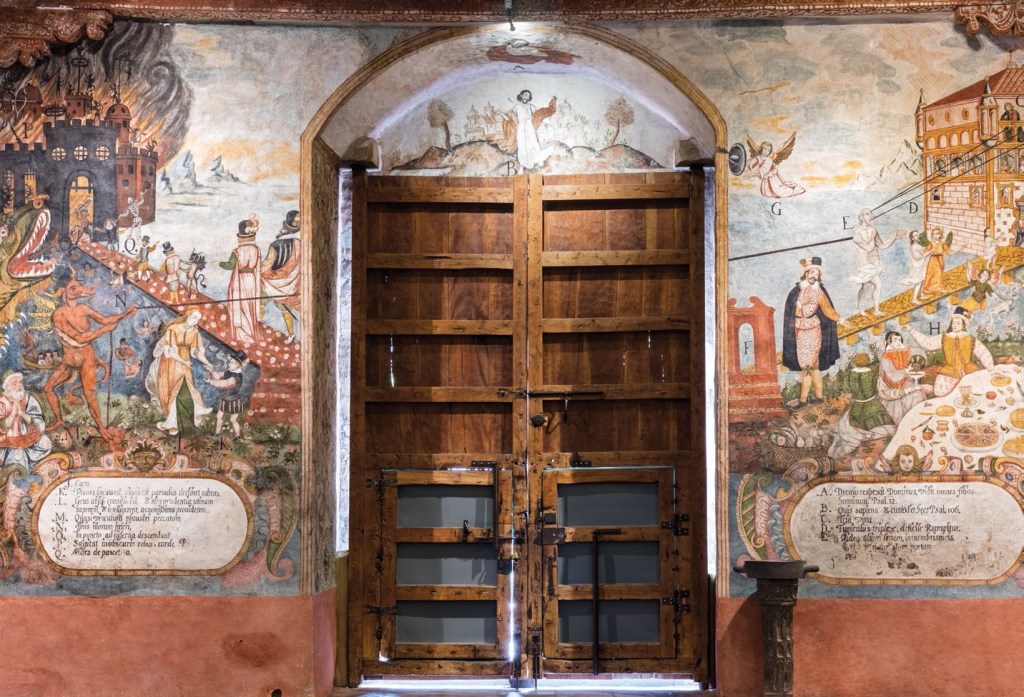
Luis de Riaño and Indigenous collaborators, The Paths to Heaven and Hell, c. 1626, San Pedro Apóstol de Andahuaylillas, Peru (photo: courtesy World Monuments Fund)
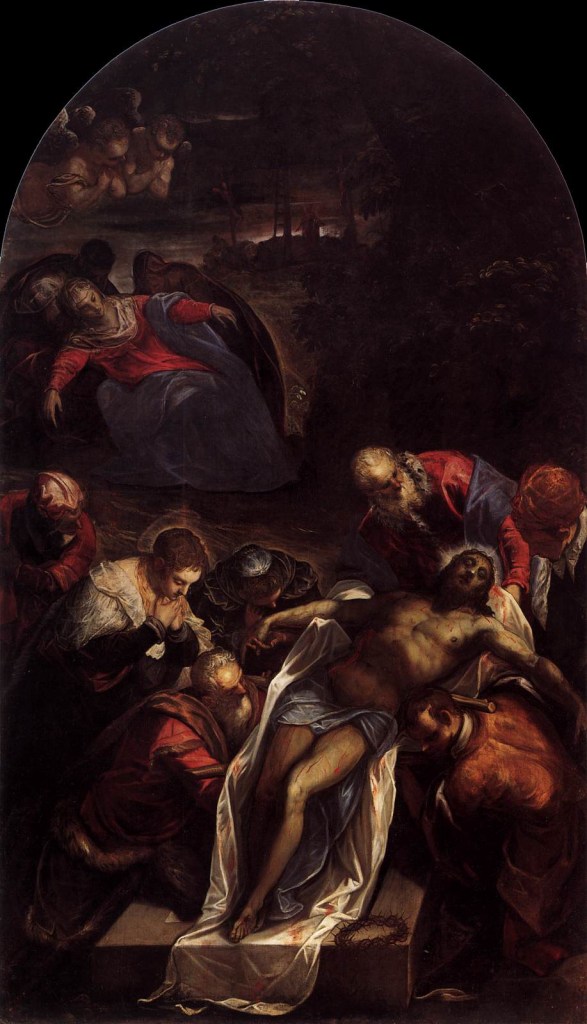
Jacopo Tintoretto (c 1518-1594), The Entombment (E&I 313) (1592-94), oil on canvas, 288 x 166 cm, Church of San Giorgio Maggiore, Venice, Italy. Wikimedia Commons.
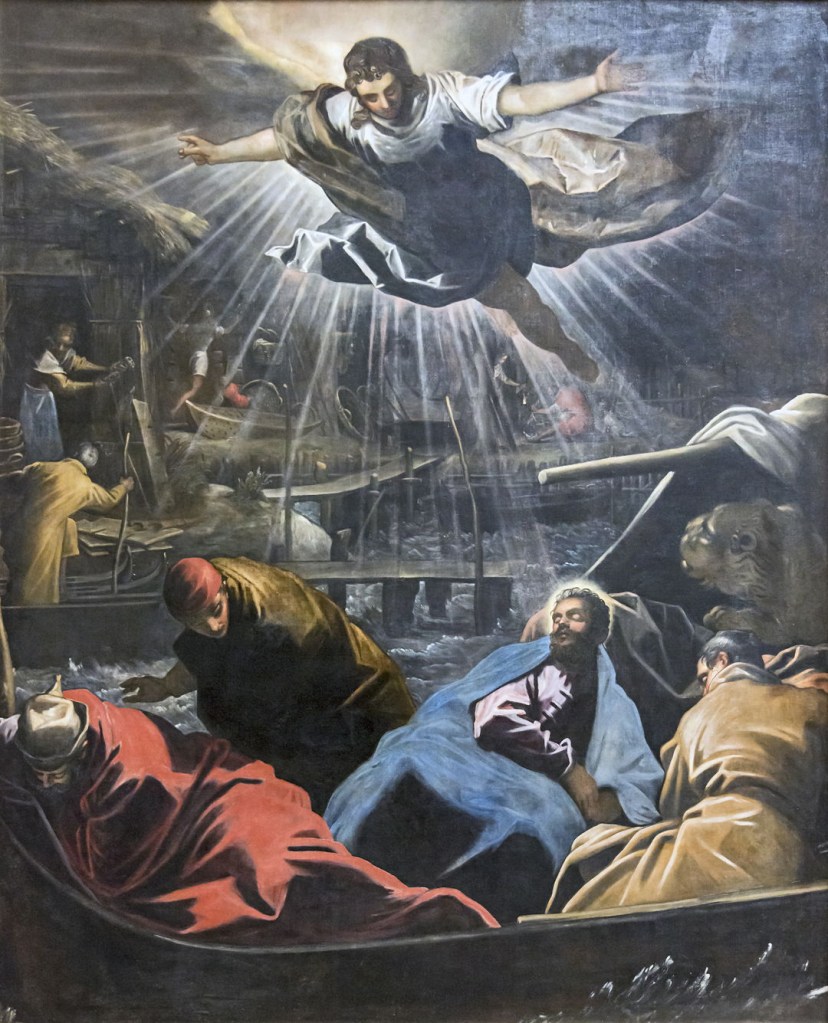
Jacopo Tintoretto (c 1518-1594), Dream of Saint Mark (Pax Tibi Marce) (E&I 305) (c 1591), oil on canvas, dimensions not known, Gallerie dell’Accademia, Venice, Italy. Image by Didier Descouens, via Wikimedia Commons.
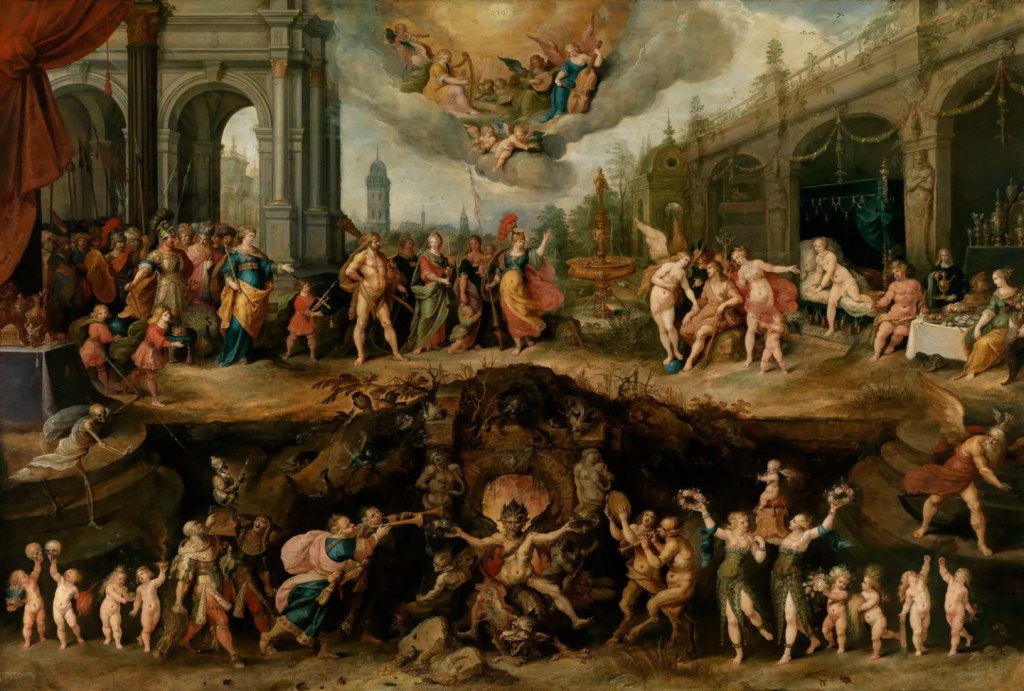
Frans Francken the Younger (1581–1642), Mankind’s Eternal Dilemma – The Choice Between Virtue and Vice (1633), oil on panel, 142 x 210.8 cm, Museum of Fine Arts Boston, Boston, MA. Wikimedia Commons.
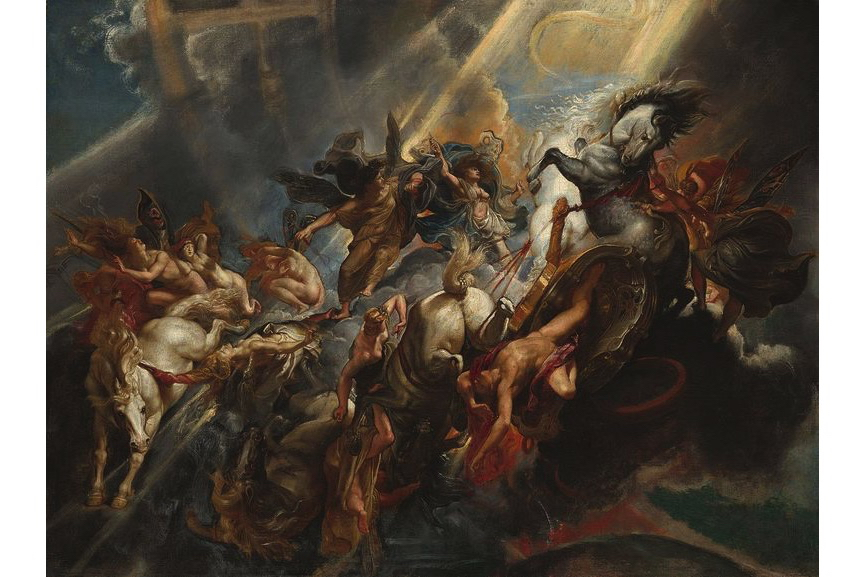
Featured image: Peter Paul Rubens – The Fall of Phaeton, c. 1604-1605. Oil on canvas, 98.4 x 131.2 cm (38.7 x 51.6 in). The National Gallery of Art. Image via Creative Commons
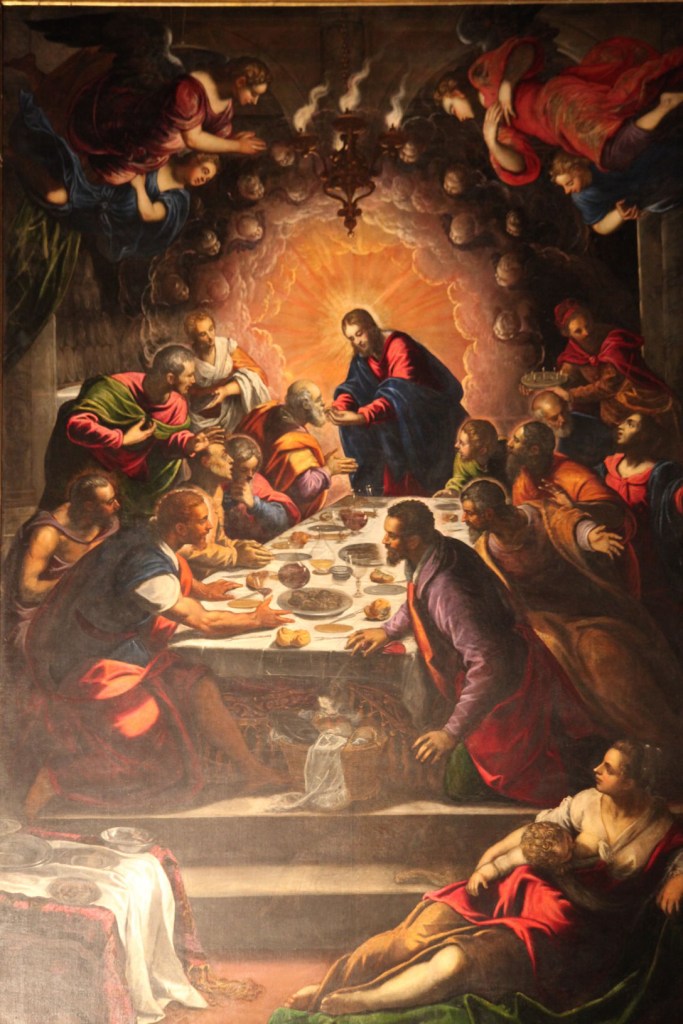
Jacopo Tintoretto (c 1518-1594), The Last Supper (E&I 310) (1592-94), media and dimensions not known, Duomo, Lucca, Italy. Image by Mongolo1984, via Wikimedia Commons.
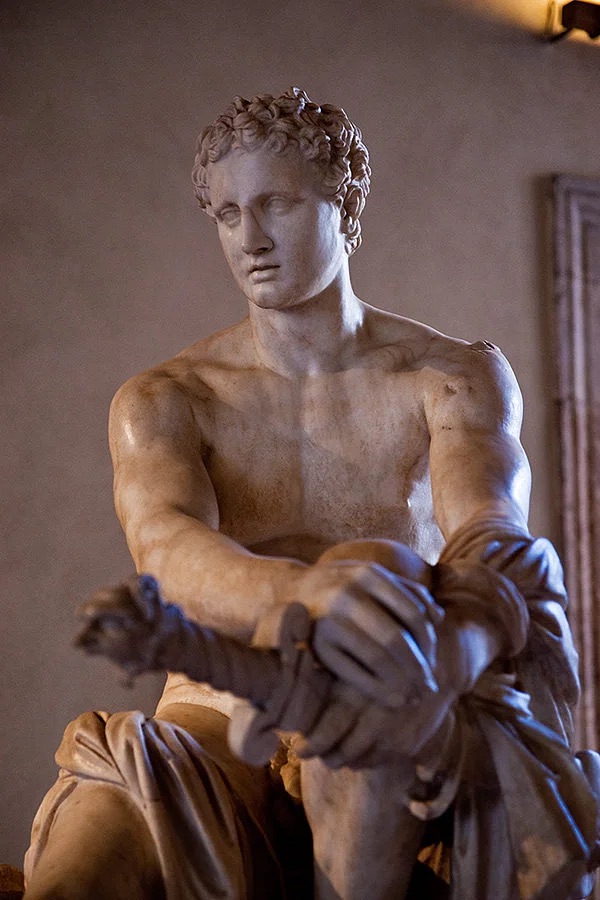
2nd century BCE marble sculpture of the Ancient Greek god of war Ares (Roman name: Mars). Ludovisi Collection, Museo Nazionale Romano, Palazzo Altemps, Rome.
Frans Francken the Younger (1581–1642), Mankind’s Eternal Dilemma – The Choice Between Virtue and Vice (1633), oil on panel, 142 x 210.8 cm, Museum of Fine Arts Boston, Boston, MA. Wikimedia Commons.




 Cursten Branden Lewis
Leave a comment